NEW BOOK: Fit for Life – How to be fit and healthy at any age
I have just published a book that gives you a great overview of all of the principles of health and fitness, at any age. You can buy it on Kindle or in paperback on Amazon at this link, or simply go on your local Amazon site and search for “Fit for life Dorgan”.
To give you an idea of the book and its contents, here is an extract from the Introduction:
“INTRODUCTION – A GUIDE TO HEALTHY LIVING
If you’ve bought this book, then it already tells me that you are motivated to retain, build and transform your health and fitness. That’s a great start.
I will take you step-by-step through the ways in which you can achieve your goals, with some useful facts to underpin your choices. This begins with setting those goals and moves on to creating a personalised plan to achieve them, with all of the exercise and nutrition information in the later chapters as your resources. It is fine to experiment a bit too, as you find your ideal lifestyle exercise balance.
Fitness is not just about forcing yourself to do a lot of unpleasant, sweaty exercise in the hope of creating a great body. It is about creating a well-planned path that you enjoy, that gives you balance, makes you feel and look great and that you ultimately look forward to. Most health and fitness issues come from habits we have created over our lifetime so far and, yes, breaking those habits will sometimes feel like a chore, but rest assured that the new habits you create will quickly become your preferred norm, especially when you experience the benefits – feeling good, with more energy, and looking good too.
Don’t go on Instagram and find a random set of exercises that promise you results – many of these are not balanced and often work off incorrect principles. Remember, many of the so-called trainers on Instagram are just ordinary people trying to build a following and make some money. That makes dramatic results, eye-catching routines and gimmicks the order of the day, and the exercises shown are often, though not always, poorly executed. Learn the principles I will describe in this book, then use that knowledge to build your own personalised programme, based on principles that work.
The healthy lifestyle – it’s all about gradual rebalance
A healthy lifestyle is one that relies on balance. If you eat a balanced mix of foods, get a good balance of physical activity and enough sleep, without adding an imbalance by overindulging in alcohol or excessive sugars, then you are likely to be pretty fit and healthy already. If there are imbalances, then it is easy to correct these with a little effort.
The main challenge is that the modern lifestyle often forces us out of balance. If you have a job that requires sitting behind a computer for eight hours a day, that limits your physical activity and often makes you feel tired, just from the mental strain and sustained, stationery concentration, then you may feel you need some comfort activity like eating, drinking alcohol, watching hours of television or over-indulging in general at the end of the day. The trick is to break the habit by building energising physical breaks into your work, creating an active alternative to after-work activities that will quickly replace your comfort habits, but in a healthy way. Add good food and the deeper sleep your more active routine will bring, and you will soon be looking and feeling much better as a result of your more balanced lifestyle.
You don’t have to change everything at once, in fact, trying to be too radical in your change usually leads to failure, as evidenced by so many abandoned New Year’s resolutions. Instead, make one or two changes at a time and, before long, you will find you have easily slipped into a healthier lifestyle. If you make one or two changes per month for a year, that’s a whopping 12-24 changes – as many as you will ever need.
Set some clear and realistic goals and gradually achieve them, ticking off your achievements as you go. Setbacks will occur for various reasons (a cold, an unexpected burst of work pressure), but these are temporary and should be set aside once dealt with, as you refocus on your goals and resume your journey. Don’t dwell on them; just pause, then move on.
Working with nature
We evolved over hundreds of thousands of years for a hunter-gatherer lifestyle, yet in the last several hundred years we have moved to a lifestyle that is completely unlike that in almost every respect. Understanding how we evolved and what this means for our bodies, in terms of exercise, food, stress and balance of activities, is like gold in planning your health and fitness journey.
As hunter-gatherers, early people were nomadic, following herds of antelope and settling briefly in fertile areas before moving on. This meant that they spent lots of time walking long distances, foraging for fresh fruit, seeds, nuts, roots and leaves as they went, then settling for a time to organise and execute hunts that required running, throwing weapons, lifting and carrying heavy loads. The hunts produced a sporadic supply of lean protein. Gathering parties would seek out the resources in an area, often while carrying smaller children or the elderly, then gather food for consumption or preservation. Most time was spent outdoors. Food preparation was communal and shared. Sitting around a fire in the evening was communal time to eat together, share stories and plan the journey ahead.
Because of the high levels of steady exercise and the lean, bland, but very varied diet, we evolved a particular liking for the rare foods and minerals, especially fats and oils, salts and sugars. It was healthy to crave these things, so that every rare opportunity to get hold of them was taken, but they were never in high supply.
Cut to the modern world, where most people never walk very far at all, live sedentary lives, often alone or in a small family unit, with infinite supplies of fatty, salty and sugary foods. The bodies that evolved for hunting and gathering consume the fats, salts and sugars in excess, as if they were rare, often fail to eat the lean or fresh produce, but rather the highly processed foods, and don’t expend enough energy to burn the calories consumed. No surprise that we have overweight and obese people as the norm in the western world.
But let’s turn this to our advantage. How do we simulate the ancient world in our own lifestyle choices? We can walk more, or do other cardio-vascular exercises like hill-walking, swimming or rowing; use gyms to do loaded exercise and strength-building. We can eat lots of fresh root and leaf vegetables, grains and fruit, with lean protein for building and repairing muscles. We can try to be more active during the day and settle down to connect with family and friends at the end of the day. Doing all these things while generally avoiding extremes, like over-indulging in sweet or salty foods and alcohol, will give you the best chance of being the healthiest and fittest you can be. This doesn’t mean depriving yourself – in addition to enjoying all the tasty healthy food, the occasional sugary item or glass of wine will not hurt you, as long as you keep the overall balance.
The “you” that you start with is also important. We all have the same building blocks of physique and metabolism, but in slightly different versions, depending on our genes and early nutrition and exercise. Work with what you have, building the best (and unique) version of you. Build good habits and use the best principles of exercise and nutrition, and it is actually quite easy. Set realistic goals and gradually achieve them. I’ve seen hundreds of people do this and then look back and reflect on how what had seemed a mammoth task, actually turned out to have been an easier and more pleasant journey by far.”
I hope you will find this inspiring and buy the book. If you do, all feedback will be gratefully received!
Going back to the Gym after Lockdown
After more than a year of lockdown, most of which we have spent without access to our gyms, we can finally go back this week. This is a welcome opportunity to deepen and broaden our portfolio of exercise, adding weights and cardio machines to our outdoor and home workouts. It is also a risky moment, as we all tend to overdo our exercise when we restart, and weights especially have a big impact on muscles. This post is an overview of how to gently ease yourself back into the more demanding routine of the gym.
Take it slowly
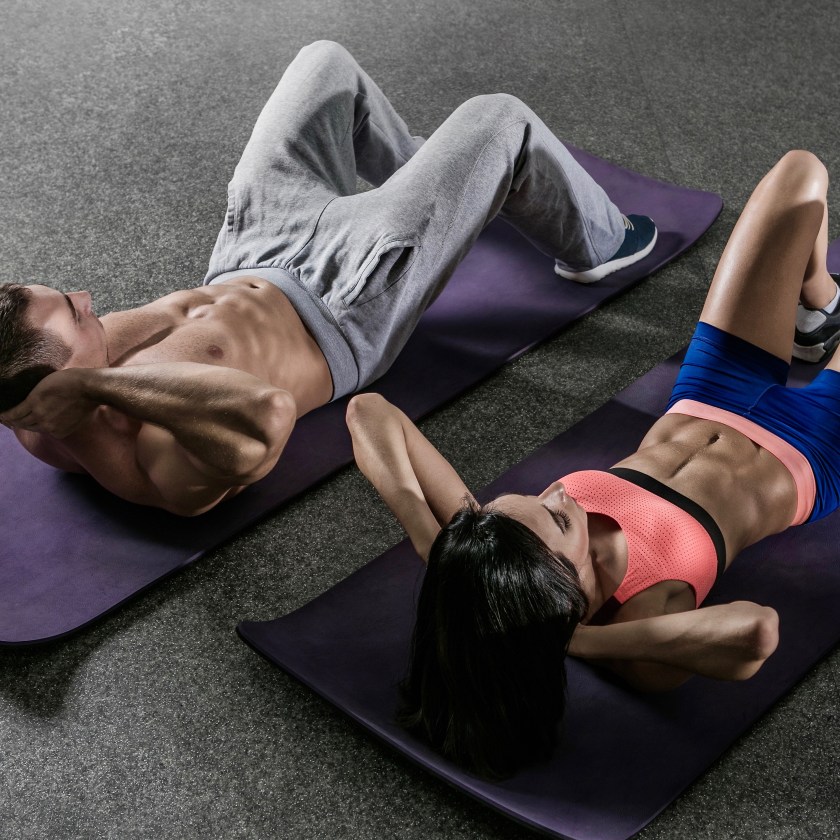
If you have been keeping in generally good condition during lockdown, with regular cardio and bodyweight exercises, HIIT or an intense sport, then your body will be used to exercise and your muscles in good condition, but not yet used to the impact of heavy weights. If this is you, then add a strength session or two in your first week back, using lower weights than usual, then increase these over a six-week period. This way you will build on your good underlying condition and acclimatise your muscles to the heavier weights, without fear of injury.
If, on the other hand, you have reduced your exercise in general during lockdown, so that you have lost cardio ability, muscle condition and some strength, then it is better to begin as though you are starting exercise for the first time. This means doing a couple of days a week of at least 30 minutes of cardio – in the gym or outside – and a couple of days of muscle conditioning, then introduce light strength work and build it up. Strength should be built up over a minimum of six weeks and ideally twelve.
Start with muscle conditioning

Cardio capability is the foundation for muscle conditioning, and muscle conditioning is the foundation for strength. In its turn, strength is the foundation for performance sport and more.
When you get back into the gym and start using the weights, taking a muscle conditioning approach first can build the foundation for heavier work later. This involves using weights of about 66-80% of your normal maximum weight for that exercise, doing 12-15 repetitions for 3-4 sets. As you add more strength work over time, the strength sessions can involve weights of 80-100% of your maximum, doing 8-10 repetitions for 3-4 sets.
In this way your first week back might include conditioning sessions and no strength sessions, building up over time to introduce one strength session a week and then perhaps increase to two. Early sessions can be full body sessions, but as you move to heavier work, it is useful to divide your sessions in two to get recovery time for each muscle every other day. This can be done with e.g. chest, triceps, shoulders and some leg exercises on one day and back, biceps and your other leg exercises on the other day.
Don’t forget recovery time
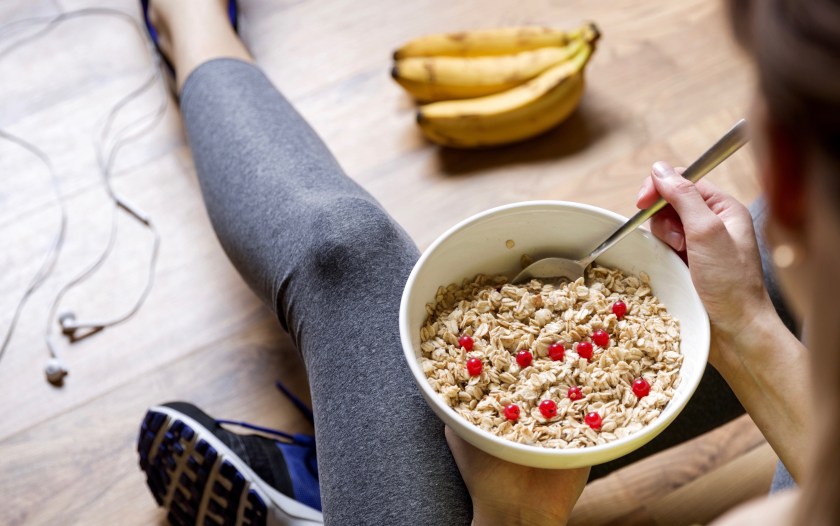
When you do start loading muscles in intense conditioning, but especially in strength work, it is critical to allow your muscles to have at least 24-48 hours of recovery. This time is spent replenishing the muscle’s energy and building and recovering the muscle fibres. Failing to factor in recovery time leads to overstressed muscles that remain sore and underdeveloped, leading eventually to injury.
Deal with stiffness and flexibility
Cardio exercise and muscle conditioning can lead to some muscle stiffness initially, if intensely practiced after a break. This can be minimised with a gradual approach, but some stiffness is probably inevitable. This can be dealt with by doing some good stretching a flexing. Using a roller can also help, as can a good massage.
A gentle start and gradual increase will minimise any stiffness, and this will be a temporary challenge. Using a stretching and flexing routine is generally good practice, even in the absence of any stiffness.
Get professional support
Making sure your return to full training is safe and supported is best done with the support of a qualified Personal Trainer. If you need any support, face-to-face or remote, don’t hesitate to contact me. Good luck with your training!
HIIT+ workout for the older exerciser
I have had lots of requests to post a combination bodyweight workout for the older exerciser, so have prepared the one below – a 15-20 minute workout. It can also be used as a light maintenance workout by exercisers of any age.
We launch our fitness videos on YouTube
We have launched our first fitness workout on YouTube. Head there to subscribe for regular updates or click below to watch this 20 minute full body workout for beginners.
Keeping New Year’s exercise resolutions
Every year, thousands of people resolve at New Year to get fitter and healthier and for many this includes heading out jogging or heading down to the gym. If you’ve been to the gym in the first week of January, you will know what I mean. It is generally packed with people, earnestly embarking on a new course of exercise.
The sad fact though, is that 80% of these exercisers will not sustain their new regime past the end of January and a significant number will injure themselves trying to do too-demanding exercises without guidance or preparation. So, how do you sustain the New Year’s exercise resolution without injury or relapse?
The first thing to do is to set realistic goals.
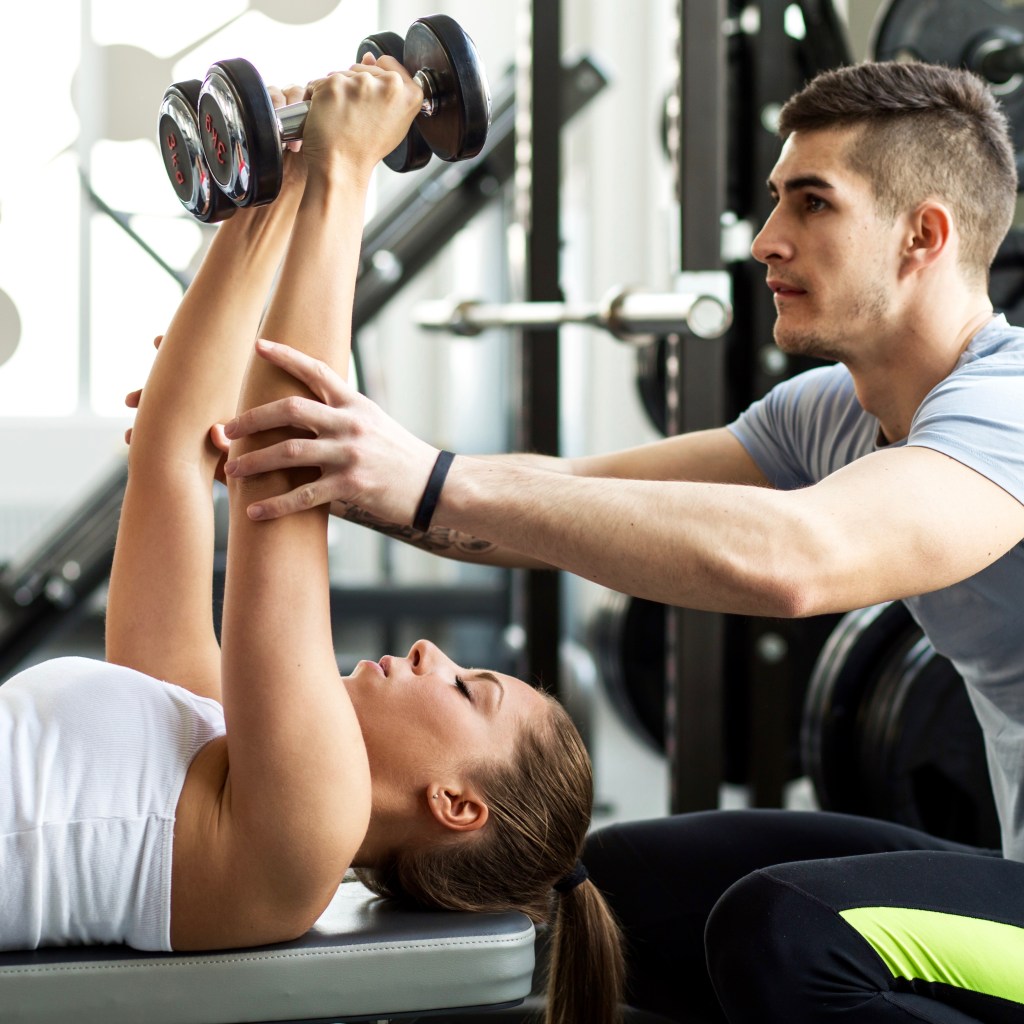
If you have done no exercise for some time, you need a graduated programme of fitness building first, so the first goal will be to achieve exercise-ready fitness. A Personal Trainer can be very helpful in achieving this and subsequent goals, as they can guide you in how to safely and gradually get fit.

If you want to lose weight as a primary goal, then a combination of nutrition and good cardio exercise routine is best – once again done in a gradual way, so that your goals are achievable and sustainable.
If, on the other hand, you are an exerciser already, but want to up your game, then it is more about setting goals that increase intensity, through more frequent exercise or exercise that requires gradually greater effort. In the gym, this might translate to increased numbers of reps or sets or gradually increased weights in your strength exercises.
The key word thoughout, whatever your goal, is “gradual”. Don’t try to hit your end goal in week one, as this is a recipe for injury and demotivation.
The second thing is to turn your goals into a programme

If you focus only on the current week, there is a tendency to allow short-term difficulty or tiredness to become an excuse to miss exercise sessions, but if you always see your training as part of a worthwhile longer-term programme, it is easier to keep going.
Turn your goals into a calendar of milestones you want to achieve over the next 6, 9 or 12 months, making sure they stay realistic, and always check back to these when planning your individual training sessions, so that every session becomes a building block towards the bigger goal.
The third thing is to exercise with a training buddy

It has been shown that you are 90% more likely to keep to your exercise programme if it involves another person or a small group. This is a powerful insight, as it means that you can increase your likelihood of succeeding in your health and fitness goals and ensure some great social time too.

This might include setting up a small running or cycling group. It might include meeting up with a friend in the gym. You can join a cardio class of like-minded people. Hiring a Personal Trainer has the same effect and the added benefit that you commit from the outset to a minimum number of sessions – a good first programme should cover at least six weeks.
So, it is great to have the checkpoint of New Year to re-evaluate your lifestyle and goals and it is great to set new health and fitness targets for the new year, but to make sure you get the benefits, you need to stick to the programme. The best ways to do this are through setting realistic goals for gradually increasing your fitness, losing weight or upping your performance, through creating a long-term programme of milestones and through finding a good training buddy.
Good luck with your programme!
Do you need supplements?
It has become popular to rely on supplements, vitamins, superfoods and trending ingredients like turmeric as fix-alls for our health and fitness. This is no less true in the fitness industry where, in addition to the mainstream supplements, we find exercisers using whey protein, creatine and chemicals that cause the body to artificially burn fat. But do we really need any of these? Indeed, can they be harmful?
The importance of a good diet
A good, balanced diet should provide you with all of the basic nutrients, vitamins and minerals that your body needs in order to be active and healthy.

This means having 40% carbohydrate, plus some oils and fats, for fuel; 40% of a good variety of fresh fruit and vegetables, mixing lots of colours, roots, leaves and fruits, plus 20% protein for building a repairing the body. Some of that protein should come from dairy products.
This kind of diet will provide all of the things we need, but in some circumstances, we may choose to lightly supplement. For example, if you live in a northern climate where sunlight is low in winter, then extra Vitamin D could be useful. If you are pregnant, you may want to add a few vitamins recommended by your doctor to ensure a healthy baby.
Diet in exercise
For the exerciser, it is only when you begin to exercise more than average – for intensive sport or bodybuilding for example – that it becomes necessary to look at supplements. The most common supplement in these cases is extra protein in a low-bulk form, when you are building muscles at a rate that is difficult to support from regular food alone. Taking a whey protein supplement is a good idea in these more extreme cases, as this gives high protein and calcium to support the muscle and bone growth.
For regular keep-fit type exercise, no supplements should be needed if you have a healthy diet and no specific health condition that requires extra care.
Other supplements
Personally, when I see superfoods praised online, I ignore them. These are usually fads that are fuelled by the health food industry or the viral effect of online activity. Most have little effect over and above their role in a healthy, balanced diet.
Creatine is a supplement that has become very popular in sport and bodybuilding, as it tends to increase the muscle performance and bulk. However, no long-term studies have been done to determine the effect of sustained use of creatine supplementation. In my own experience, when I tried creatine in my earlier exercise career, I found it raised my blood pressure, which is certainly not a desirable result.
Fat-burners and other chemicals that interfere with the body’s natural metabolic processes should be avoided at all costs. These have harsh and unnatural effects on the body and we simply don’t know what the longer-term effects will be.
In summary

Eat well and exercise to keep fit without supplements, unless you have a specific circumstance in which a health professional recommends some supplementation. If you are intensively growing muscle in your sport or for bodybuilding, do add some extra low-bulk protein like whey in moderation, but only if needed. Otherwise, forget the supplements and focus on training and eating well!
For specific exercise advice and general nutrition, do contact me for a chat.
Keeping motivated to train
Training your body can be so satisfying – you feel energised, your muscles feel good, you’re looking better than ever and your mind is clearer. But every now and then it is easy to get into a rut, when training feels more like a chore, your routine feels repetitive and you feel a bit bored. So how do you respond to re-energise your training?
Check your diet and lifestyle

Low energy and a lack of motivation can mean you are lacking some of the key nutrients in your diet or it can mean you are overtired from too little sleep. Stress can also cause low energy.
Your diet should include 40% carbohydrates, 40% of a wide variety of fruit and vegetables and 20% proteins, with some fats and oils. Too much refined carbohydrate like white sugar can leave you feeling low in energy once the initial energy peak has passed.
Every adult needs at least 8 hours of sleep a night and this is especially true if you are doing physical activity. Switch off the television and other devices early, have a warm bath and curl up for a great night’s sleep – you’ll be surprised what a difference it makes.
If you are stressed from life’s daily challenges or overwork, take some positive steps to address the causes as far as possible, then use a good routine of good diet, enough sleep and healthy exercise to balance the stress.
Review your goals and refresh your programme
Take some time out to think through your training goals – weight loss, general fitness, muscle building, preparing for your sport – and reset them. If you are still on the way to achieving your goals, review them. If you have achieved your initial goals, set new ones. Having clear goals can be enormously motivating.
With refreshed goals, you can think through your exercise programme to ensure all the elements are there – cardio for leanness, muscle-challenging work for strength and shape, conditioning for overall fitness or sports preparation.
Boredom with a repetitive routine can be an issue, so try something different. You can use a different kind of cardio by swapping out cycling for running or using different equipment to e.g. row instead of cross-train. Similarly, with strength work – there are useful libraries of alternative exercises online or from your Personal Trainer.
Find a training buddy or group

Sometimes we are bored with our training because we are training alone. Having a training buddy with similar goals offers not only a chance to exercise together to achieve the goals, but a chance to have some social time that leaves you feeling more motivated.
The same applies with a small group, as people chat, compare notes, compete and help each other.
Use a Personal Trainer to refocus your training and give new motivation
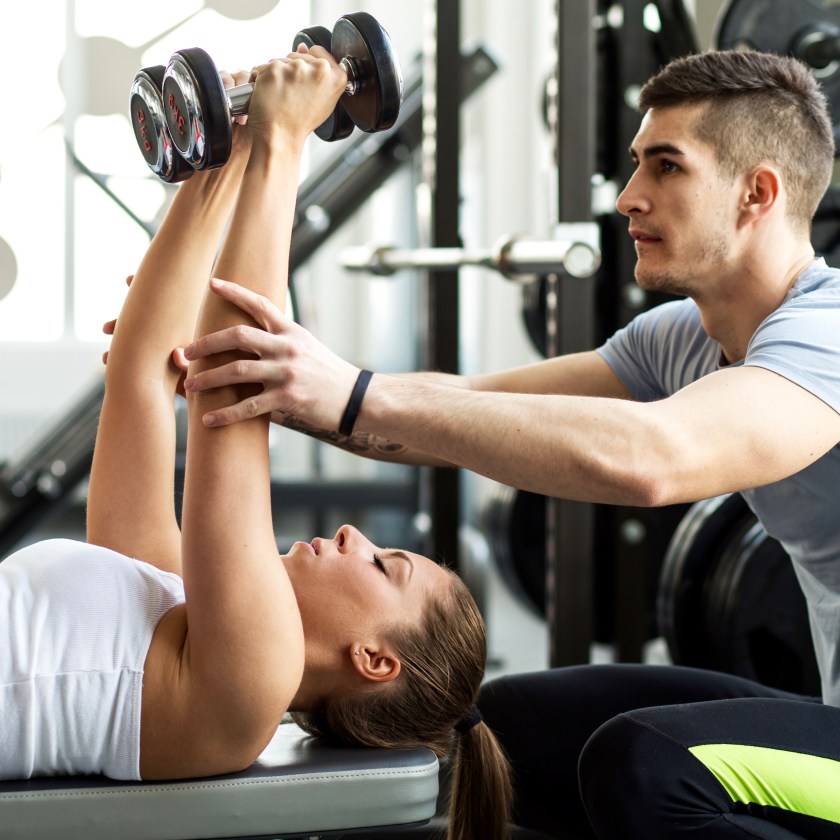
A Personal Trainer can be invaluable in helping you objectively assess your programme, offer useful advice and design a refreshed programme that better meets your goals and needs. This shouldn’t be too expensive either, as all Personal Trainers will offer a variety of support that ranges from light assessment and advice through to intensive personal training.
So, if you are finding training a chore, rather than the satisfying interlude in the day it should be, try some of these tips – check your diet and lifestyle, review your goals and refresh your programme, find a training buddy or group and/or use a Personal Trainer to refocus your training and bring new ideas and motivation.
Do contact me if you want some help and support!
Common gym questions – which exercises and what order?
Many new and established gym-goers are unclear about the order in which they should exercise and which exercises will give the best all-round gains, or indeed the specific weight-loss or strength-building gains they want.
These concerns are often expressed as the following two questions, so I thought it would be good to address them here.
Question 1: Should I do cardio training or strength training first?

It depends on your goals. Many personal trainers think that performing strength training before cardiovascular exercise will augment the amount of fat used during the cardio workout because the strength training will deplete the muscles’ store of carbohydrates.
However, strength training is not likely to deplete carbohydrate stores, because a lot of the workout time is spent resting between sets and exercises. Even if the strength workout were long and intense enough to do this, exercising in a carb/glycogen-depleted state has many negative consequences, including an increase in acids produced in response to low carbohydrate levels, low blood insulin, hypoglycaemia, increased amino acid (protein) metabolism, increased blood and muscle ammonia and a strong feeling of fatigue.
Currently, no research shows that strength training immediately before a cardio workout increases the amount of fat used during the cardio workout, or vice versa. Most likely, the intensity of the activity, not the mode of exercise, determines the “fuel”—either fat, carbohydrate or protein—that is used.
However, if you strength-train first, it is possible that muscle fatigue incurred from the strength training could cause you to decrease the intensity of your subsequent cardio workout, thus leading them to expend fewer calories over the workout as a whole.

If the primary goal is to increase aerobic endurance or lose weight, then you should perform cardiovascular exercise first. If the primary goal is to increase muscular strength, then you should perform strength training first.
Basically, in order to get the most out of the workout, you should perform the most important type of exercise when you are not fatigued. Because many clients want to lose weight and increase muscular strength, alternating the order of the workout during different cycles of training is one way to satisfy both goals.
Question 2: What is the difference between using weight machines versus free weights?
Ignoring the effect of gravity in creating resistance during all movement, free weights, such as dumbbells, keep the resistance on the muscle constant throughout the joint’s range of motion, while weight machines use variable resistance, with the resistance changing throughout the range.
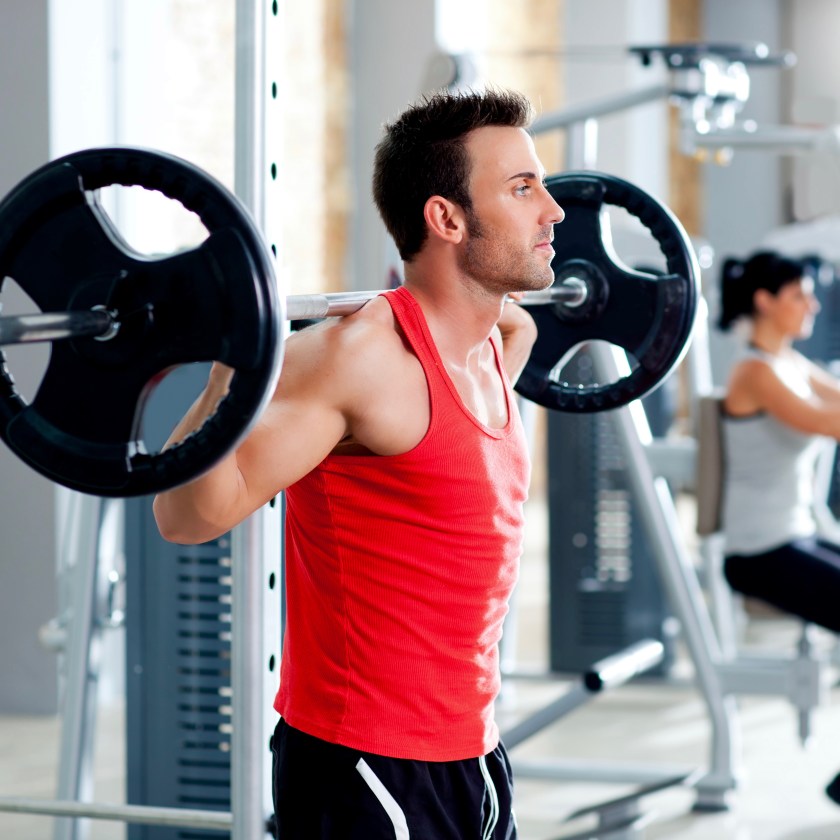
Without getting too complex, machines have geometrically shaped mechanisms that change the torque required of the muscles by changing the lever arm of the resistance they offer to your muscles. In this way, machines place more stress on the muscles at the angles at which muscles can produce greater force. Since there are points in a joint’s range where the muscle is stronger and points where it is weaker, and the amount of weight you can lift freely is limited by your weakest point, free weights serve only as a strong enough training stimulus for the weak joint positions, whereas with machines, the load changes to provide optimal resistance throughout the entire range of motion.

On the other hand, movements using free weights occur in a space, while most weight machines allow movement only in a single, guided plane. With machines, the movement is guided, so mostly the major muscles required to perform the movement are used. With free weights, the added task of balancing the weights in unsupported space recruits other functional muscles that machines do not recruit.
A good guideline if you are new to weight training, is to begin with machines to train the major muscles, and then use free weights to train more specific movements and balance.
I trust you have found these Q&As useful. Don’t hesitate to give me a message or call if you want to discuss these or other questions in more detail.
Building muscle bulk vs building muscle definition
Once you have achieved a certain level of fitness, you might want to consider how to create the kind of muscled look that gives you balance and looks good. This means growing bulk in the muscles you want to accentuate and creating definition around the edges of muscles to look lean and strong.
Bulking up

There is an old bodybuilder’s saying that muscles only grow to the size they need to be to lift the weight you’re using – heavy weights build big muscles. So the first principle for bulking up muscles is to push your weights gradually up. Doing pyramid exercises are good for this – e.g. do 5 sets of an exercise, gradually reducing the number of repetitions as you raise the weight for each set, until your last set is say, just 2 repetitions at 95-100% of the maximum weight you can manage.
Exercises that use the full range of your joints tend to build the whole muscle used, so these are the ones to use for bigger muscles. A chest press for example requires the chest muscles and triceps to move through their full range. The centre of the muscle will grow to accommodate this movement over time.
In addition, you can increase the thickness of muscle fibres by doing these same exercises at 85% of your maximum weight, but using high numbers of repetitions – e.g. 4 sets of 15 reps.
Developing definition
Definition is a function of two things – body fat and the development of the extremes of the muscle nearer the tendons.

To reduce body fat, you need to include cardio exercise in your routine. This burns calories and reduces overall body fat. No matter how defined your muscles are, if you have a thick layer of fat covering them, the definition will be less visible. Of course, you should aim to keep enough healthy fat – 10% in men and 20% in women are the recommended minimums.

The weight exercises that increase definition are the ones that use the edges of the muscles, often with joints in a more fixed position. For example, chest flies involve using arms that remain outstretched, creating high leverage and forcing the chest muscles to work on the inner edge. This shapes and defines the chest muscle. The same principle can be applied to every part of the body.
So, develop a routine that grows muscle bulk and creates definition by alternating heavy strength work, lighter muscle conditioning, some good cardio and some targeted definition work. In this way you will develop a physique that looks strong, lean and defined in no time. As always, balance is the key.
If you want any help or support creating a good, balanced routine for looking good, do contact me. I’m always ready to help.
The importance of the core
The core of the body is the foundation of good fitness, agility and strength. Many people think of the core as just the abdominal muscles (abs) only, but in fact the core is a sheath of powerful muscles wrapped around the lower trunk, including the spinal muscles and the abs, connecting the spine, hips, ribs and abs. If you only concentrate on developing your abs, you will see benefits, but ideally you need to include spinal, rotational and integrated exercises to build a truly strong core.

The core muscles help us to sit down in a controlled way, they provide support to the spine and they allow you to comfortably and effectively turn, twist and bend. In the athlete, the core provides the body stability around which more efficient arm and leg movements can be made. For throwing disciplines like discus, these are the main muscles that create force. They assist in balance. In fact, in every sport, a strong core is an essential foundation for proper performance.
By contrast, a weak core will hamper you in daily tasks, effect your balance and cause you to struggle with twisting, turning and lifting, especially if you are also overweight. A weak core is often caused by a sedentary lifestyle – too much sitting, whether at a desk or on the sofa.
Developing the core is best done by adding a few core exercises to every routine you do. A few core exercises daily will quickly produce benefits. In this way, you are always adding core strength and flexibility. In addition, many other exercises, like pull-ups, require the core to be engaged, so choose exercises in your routine that reinforce the core while building strength in other parts of your body too.
A lot of people ask if increased core exercises will give them a six-pack. While of course core exercises will develop the muscles required, a visible six-pack is actually a reflection of low body fat in the abdominal area. A visible six-pack in a man indicates body fat that is close to the minimum 10%, whereas in women a visible six-pack often indicates that she has reduced her body fat to below the normal female minimum of 20%, so don’t necessarily chase this ideal. A strong core and a healthy level of body fat are what is needed for fitness and good health.
A GOOD SET OF CORE EXERCISES:
Sit-ups and stomach crunches target the abs
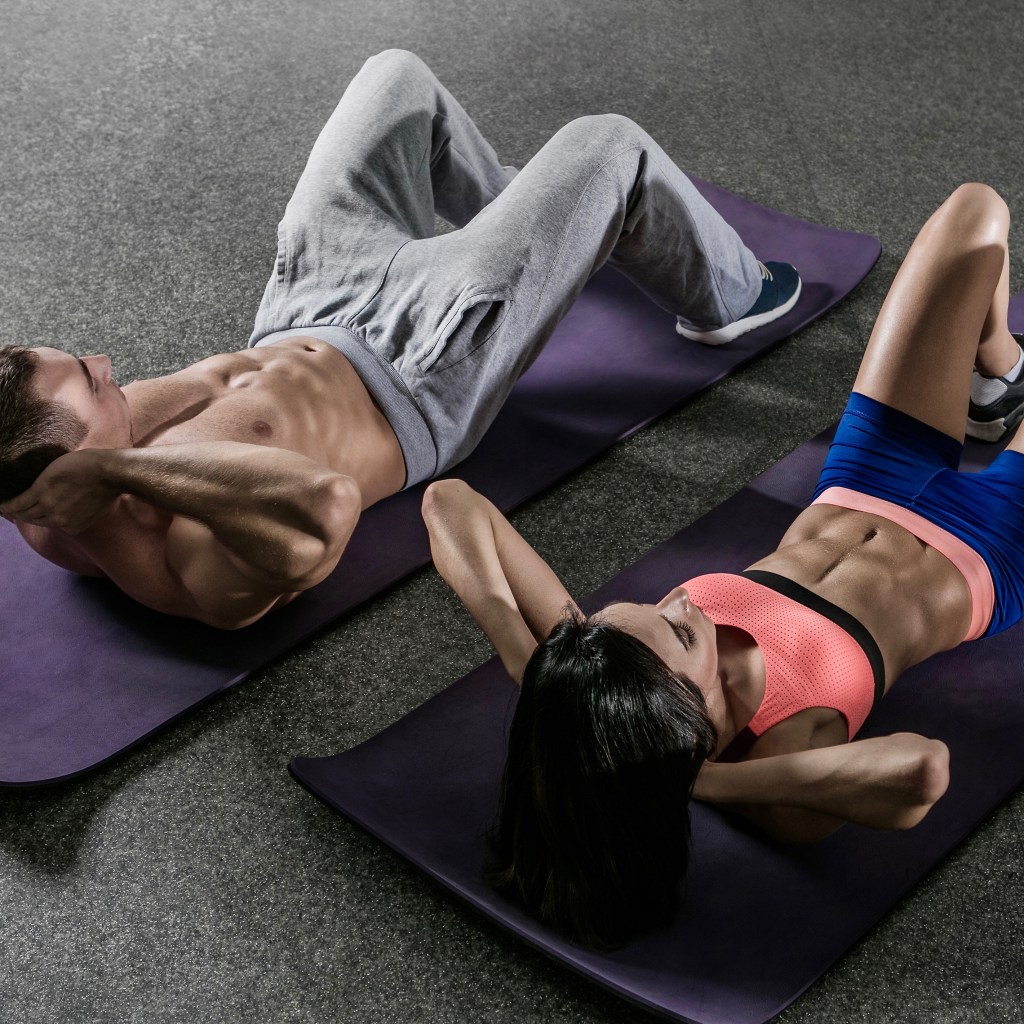
Lie flat on a mat with bent, raised knees, place your hands behind your head and curl your upper body up towards your knees, without your lower back leaving the ground. This can be done flat on the ground, on an inclined bench (more advanced) or using a seated stomach crunch machine in the gym.
Start with the number you can comfortably do until the burn in the stomach forces you to stop and add an extra repetition or two each time. I do 125 of these a day, but started much lower.
Leg raises (static and dynamic) target the abs, oblique muscles and hip area, in addition to the thighs
For static leg raises, lie on your back on a mat, arms beside you and palms flat on the mat, then raise your legs a few inches above the ground, holding this position for a time, then lower. See how long you can hold the position, then try to extend this by a few seconds next time.
For a more advanced exerciser, dynamic leg raises involve gently kicking up and down in the air with the extended legs or doing scissor actions, while keeping the upper body flat and still. Do sets of 20 repetitions to start, then build up over time, adding sets or increasing the repetitions.
The “Bug” strengthens the whole core.
The “Bug” is a variation on the dynamic leg raise, but also uses the arms, so that the whole core is used. Lie on your back with both arms and legs raises, then extend right arm and left leg. Return to the start and extend your left arm and right leg. Alternate these fairly fast, so that you are somewhat like a bug on its back, legs and arms extending and returning. Try to keep going until you feel the burn, then extend this a bit next time.
A few sets of this will give a great core workout on its own.
Weighted rotations and Russian twists target the oblique muscles around the core.
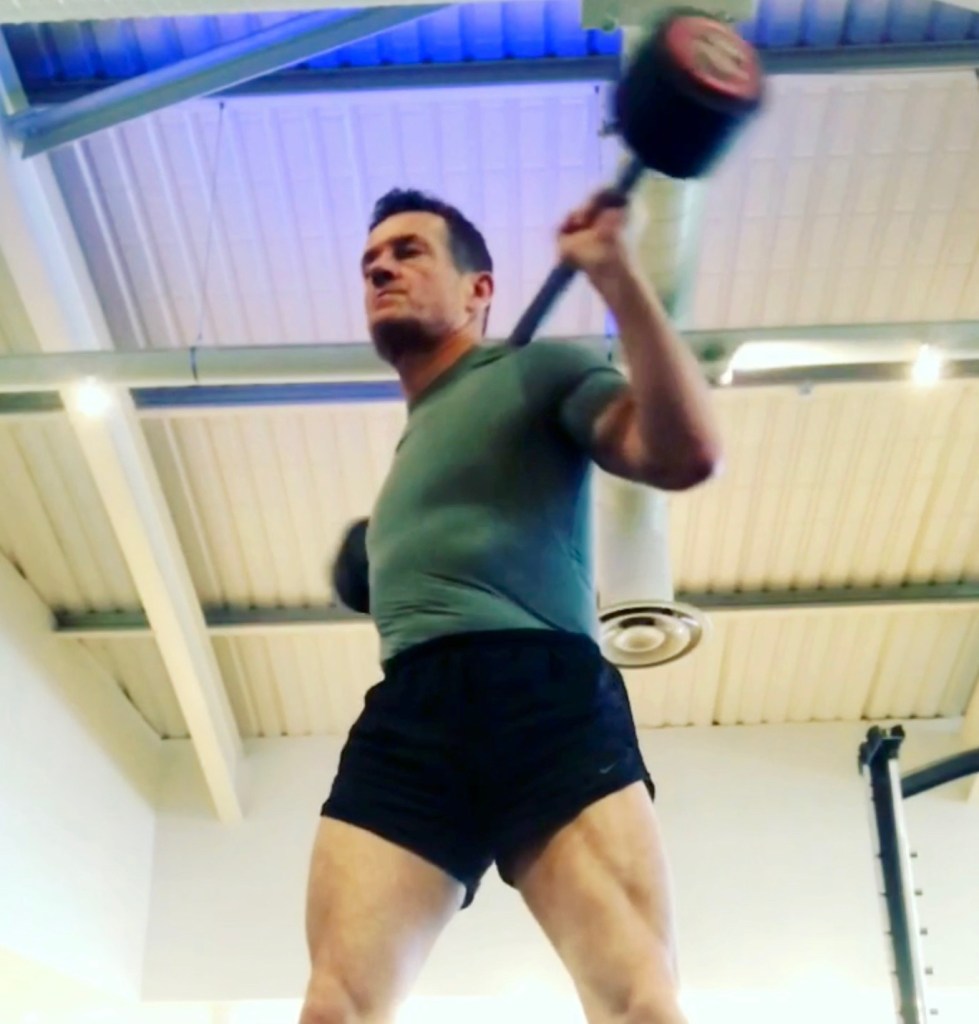
Weighted rotations involve putting a bar with light weights on it on the shoulders, holding the bar on each side in a fairly wide grip. Keeping the hips still, rotate the body gently from side to side. I find that 30 rotations with a manageable weight is a nice part of a routine.
Russian twists use a cable machine, with a handle attached at waist height. Stand side-on to the machine, holding the handle with both hands and twist away from the machine, while extending the arms. Keep the hips as steady as possible and power the twist from your core. Do 3 sets of ten to each side with a light weight, gradually increasing the weight over time.
Spine extensions strengthen the lower back and glutes (bottom).
Lying flat on your stomach, arms extended above your head, lift both legs and arms from the mat simultaneously, arching the lower back.
Plank and side plank strengthen the whole core statically or, if you add some leg and arm movement, dynamically.

The plank involves supporting your body, face down, on a mat, resting only on your toes and elbows or hands, with your body suspended still and level – hold for several minutes. The side plank is done by turning to support yourself on one elbow and the side of the foot – first left side, then right. Hold each side for several minutes.
If you have a slipped disk or chronic lower back problems, you should take care with core exercises, as some do place added strain on the lower back. In this case it is best to consult your doctor or physiotherapist before trying any exercises that may exacerbate your condition. If you have recently given birth or have a separated abdominal muscle resulting from pregnancy, you should also consult your doctor or a qualified professional before attempting any core routine.
If you want any help or support in developing a good core routine, do contact me – I am always happy to help, whether online or in person.
Scheduling exercise for efficiency and effect
We live in a pressurised world, where time is at a premium, and we don’t always have the time to spare to do long and complex exercise routines. In addition, there is a trend, especially on Instagram amongst younger exercisers, to promote long and exhaustive combinations of exercises, all targeting the same muscles – the ubiquitous “leg day” and “arm day” posts, which suggest you should focus only on one body part per day. So, what is the best way to get the right balance of time and effort to achieve your fitness goals?
Firstly, for the average exerciser, 45-60 minutes a day is all they are likely to be able to invest in exercise, some only every other day, so targeting just one muscle group per day with multiple exercises is impractical. This means using exercise routines that have multiple results in limited time. This can be achieved by using compound exercises, as described in the strength training section below.
Secondly, overloading the same muscle with multiple exercises is only good for muscle conditioning in small doses. Overdoing this will lead to stiffness, stress injuries and overtraining. These are more appropriate for Crossfit or other punishing routines that require a combination of strength and endurance, but not for your average exerciser or sports competitor.
In fact, while muscles that are used for heavy strength training do need a couple of days to recover, and so should not be exercised heavily every day, most people will be alternating strength work, cardio work and muscle conditioning. If you are doing a lot of strength work, then it does make sense to say, do a Chest & Legs workout on one day and an Arms & Back workout on the next day, with Core exercises interspersed.
So, what is the answer?
My suggestion is to split your workouts into Strength, Cardio and Conditioning days, doing each one twice in a week, with one day for rest. On each of these days you will do a full-body workout, but for time efficiency, this will comprise compound exercises (those that use several muscles at once).
Strength work

In this way for strength work, a Chest press is used for chest, shoulder and tricep muscles and a Leg press for calf, thigh and glutes, while Pull-ups or similar exercise the biceps, shoulders and back simultaneously. This uses high weights (85%+ of your maximum) with a few low-rep sets such as 3/4X8 or doing pyramids, where you start with e.g. 10 reps at 75% of your maximum weight, then do 8 reps at 80%, 6 reps at 85%, 4 reps at 90%, 2 reps at 95% and 1 rep at 100%.
If you want to target specific muscles more, you might do an extra exercise like Curls for biceps or do a superset, where you alternate two exercises targeting the same muscle, without rest in between.
Cardio work

For cardio, do a run one day, a cycle next time, and so on for rowing, swimming or the like. Good practice with cardio work, which increases heart and lung efficiency, as well as the muscles’ ability to use oxygen and energy efficiently, is to do 20 minutes of intense cardio (e.g. circuits) or 30 minutes of more gentle exercise (e.g. run 5km).
Muscle conditioning
For muscle conditioning, use your same strength routine, but reduce the weights by 25-30% and increase the number of reputations and sets you do to e.g. 5X15 per exercise. You can slightly vary the angle of exercise to ensure all-round conditioning of each muscle group.
So, forget the time pressure and forget the complex “Leg day”, “Arm day” approach. Use compound exercises and a nice varied routine across the week and you will find you feel better, have fewer injuries and you look great. Most important, you will have great all-round fitness.
If you want some help building your programme, let me know – I’m always happy to help!
Returning to fitness step-by-step
The human body is amazing in that it very efficiently adapts to the demands we put on it to create the most efficient system for using energy and resources. In this way, if you only exercise a little or not at all, the muscles of movement will be deprioritised and allowed to become weaker and smaller, and if you eat more than your body needs, it will store the excess energy as fat for possible future use. By contrast, if you put demands on the muscles of the body, the heart and the lungs, through exercise, then the body will respond by prioritising these for growth, using the protein and energy from the food we eat.
But of course, although the body is very adaptive, it does need some adaptation time when we shift from one lifestyle demand-set to another. The trick is to gradually shift from one lifestyle to another, by adding a small change at a time. In this way it will take 6-12 weeks to transition to the new regime. Thereafter, the benefits will be seen increasingly week-by-week and month-by-month.
Everyone will see results, but how long it takes to get to your final weight or fitness goal depends on your starting weight or state of fitness. Don’t be in a hurry, but you will be surprised how adaptive your body can be.
So how much change should you introduce?

From a nutrition perspective, the average man needs around 2,000-2,500 Calories of energy a day, while the average woman needs 1,800-2,200, depending on their size, build and metabolism. If you consume a balanced diet (40% unrefined carbs, 40% fruit and veg variety, 20% proteins and a little fat/oils from meat, dairy and vegetable sources) and match your calorie intake to your maintenance calorie need, you will likely stay the same weight you are now.
To lose excess weight, you need to either slightly reduce your calorie intake below maintenance levels for a time, so that your body uses some of the stored fat to make up the difference in energy needed, or increase your energy use by exercising more, but without eating more, usually a combination of both. This should be very gradual if you want to sustain the changes – aim to lose 500g a week at most.
From an exercise perspective, the best path to fitness from a sedentary lifestyle is to start with total body exercises like walking, jogging or swimming and then, once your body adapts to these, move to longer runs, higher intensity body-weight exercises and aerobic exercise like circuits or dance. For the person who wants to increase strength and improve body shape, weight training in a gym can be introduced once basic aerobic exercise is well established. Weight training is usually with compound exercises and low weights at first, increasing to heavier weights and more targeted, isolation exercises later.

Anyone of any age can return to fitness. Get a medical check-up first if you are concerned about the safety of exercising, have a pre-existing medical condition or are over 50, and don’t hesitate to get professional advice from a dietician or Personal Trainer about what to include in your diet, your exercise routine and your realistic targets.
Don’t hesitate to contact me if you want some support in getting back to fitness!
Competition-ready – preparing for a sports event
With increasing numbers of people returning to their sport after a break, entering charity marathons and choosing to compete in events, it is also common that people overtrain, start their preparation too late or end up with unexpected injuries. This is a short guide to how to plan your competition preparation, maximise performance and reduce the chance of injury – whether you are a casual exerciser or a serious athlete.

If you have a long time to prepare for your event or competition season, then this is ideal. It allows you to divide up your preparation time into three distinct phases and allows a gradual approach that allows your body to adapt without injury. In this case you should plan your preparation as follows:
Build the foundation (usually 6-12 weeks or for long off-season)
In the foundation phase you work mainly on building the underlying capabilities on which your event depends and do overall body conditioning.

For a long-distance runner or swimmer this means building up your cardio-vascular (heart and lung) efficiency, which also causes muscle fibres to become more efficient at using oxygen and energy. For this, complete long, slow runs, swims or cycles three times a week, gradually increasing the distance from comfortable to more challenging. Intersperse this with some interval training once a week to condition the muscles and build resistance to lactic acid build-up, which helps to sustain you during hill climbs and bursts of speed. The break days in between are recovery days. If your sport involves skills, such as ball handling, then do skills exercises on your recovery days or build them into your intervals. Your diet should be rich in complex carbohydrates and some oils/fats.
For sprinters and other short, explosive sports, you should do two days a week of cardio in this phase, two days of quite challenging interval training and day one day of all-round strength work in the gym. This builds good body condition, high lactic acid tolerance and the strength to power your performance later. Lightly stretch before each session and more comprehensively after. Your diet should include 40% complex carbohydrates, 40% vegetable variety and 20% lean proteins and some fat/oils.
Pre-season training (6 weeks)
In the pre-season period you should begin to increase the focus on the skills and capabilities you will need in competition, building on the solid foundation you have created.

For endurance sports, this means increasing your distance on long runs, swims or cycles, so that you are doing about 110% of your planned competition distance. Do this twice a week, with intense interval training on 2 of the days in between, and three rest days. Integrate skills work in all intervals and fast finishes in your endurance sessions. Make sure you match your carbohydrate and fat intake to your increased energy use.

For more explosive sports like sprinting, you should reduce your cardio work to one day a week, increase your strength work to two days a week, with an emphasis on explosive use of the muscles key to your sport, and do two days of interval training on the track. The interval training in this phase needs to include skills (starts, acceleration, finishes) and speed work, so that your body becomes used to rapid, explosive performance. It is key that you do a good warm-up before these sessions to prevent injury, with light stretches before and more sustained stretches afterwards. You should increase your protein intake to match the need of your growing muscles.
Competition season
In the competition season you need to be at your peak and match your preparation to your competition calendar.

For endurance sports this means completing trial runs of your event 3 times a week in non-competition weeks, with 1 day of interval training in between and 3 recovery days, while in competition weeks you should eliminate one trial run, make sure any interval training is done at the very beginning of the week, and ensure at least 2 days of recovery before your event. Increase your carbohydrate and oil/fat intake to match your energy needs.

For explosive sports, in non-competition weeks, you should do 2 strength sessions a week, two interval sessions and one speed/skills session where you practice your actual event, with a good 20-minute warm-up. In competition weeks, eliminate one strength session and allow at least two days recovery before competition day. Warm-up well for 20 minutes before your event. Continue to eat a good balance of carbs, proteins and vegetables.
If you follow this broad approach, whether for endurance sports or more explosive sports like sprinting, not only will you feel better and maximise your performance, you will be more likely to achieve your best results in competition.
For help, support or a custom training programme, do contact me. I’d be happy to help.
Good luck with your event!
Well-being and exercise for teenagers
Teenagers are at the stage in their life where they are experimenting with and choosing the elements of their adult identity, including their preferred lifestyle, activities and interests. It is therefore critical to give teenagers access to and a positive experience of healthy exercise routines and habits, so that they are more likely to integrate this into their adult lifestyles.
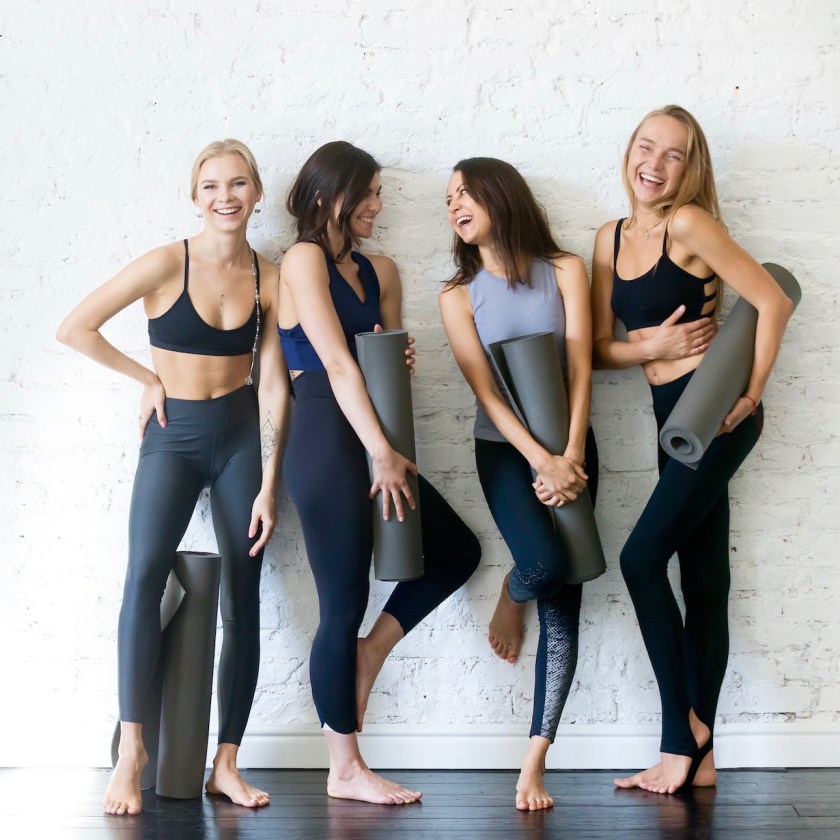
Teenagers tell us in surveys that they wish they knew more about how to be healthy and fit, how to have a good exercise routine, but they are frustrated because they have to rely on fragmented advice and often contradictory online trends. In addition, we find that from the age of 13, up to 70% of girls stop participating in sport and reduce their exercise, often because they are self-conscious about their changing bodies. Some boys reduce their sports’ involvement too, usually from around 15, but not on the same scale as girls.
Peer group is very important at this stage and certainly more influential than parents, so a good way to provide access to good exercise is by encouraging pairs and small groups who want to train together.
Another important factor is that teenagers generally need a different exercise routine than adults, as their muscle and bone growth makes them more prone to injury if hard stretching or demanding strength work are done too soon. This means matching the evolving exercise need to the programme, for each teen.

Nutrition is an important part of this too and an area of great interest for most teenagers, so it is always useful to marry exercise and food education. Even better if you can transfer some cooking skills at the same time!
The best way to set a teenager up for a healthy exercise routine is to get a Personal Trainer to teach them how to use the principles of exercise to create their own programme, preferably in a small group. This can include some training in the use of equipment in the gym, on the sports field and out and about. This equips the teens with the knowledge to confidently create an exercise programme suitable to their needs, with a knowledgeable trainer as a reference point in case they need help.
If you want to equip your teenagers with the life skills for health and fitness, contact me. My background in education, experience in well-being, and my training as a Personal Trainer, allow me to give them great skills for life. I cover life skills, exercise and nutrition. This can be done as part of my Family Fitness programme, in a group of teenagers, or as one-to-one coaching.
And remember, your example has a surprisingly strong influence on your children, so keep exercising!
The best way to build strength at any age
A lot of people ask me how I am able to use such heavy weights on certain exercises and the answer is that I have had a long-term strength-building programme, the principles of which I’ll share here.
Apply these principles and I can guarantee you will build superior strength.
Principle 1
So, how do you build good strength? The short answer is, “Slowly”! If you massively overload muscles too quickly, you are in danger of injury, both in the muscle itself and in the joints around it, so don’t be over-ambitious. Managing a weight that is too heavy for your current strength can also lead to dropped weights, overbalancing and the like – dangerous at worst and embarrassing at best!

This means setting a long-term target and adding a very small increment in load on your muscle each time. For example, if you aim to eventually do a pull-up to lift your 75kg body, then it might be a good idea to do lat pull-downs on a machine, starting at 50kg and adding 5kg each week until you reach 75kg – then try your pull-up on the bar and you’ll be surprised at how easy it is.
Principle 2

The second principle is to condition the muscle in different, complementary ways, to build the strength and condition. I find a good approach is to alternate three types of training, with a recovery day in between:
1) Interval training that targets the muscles you want to strengthen. This is effectively long, slow cardio training, with regular bursts of speed. Rowing is good for leg and back, cross-training for arms, chest, legs and core, running for legs and overall strength, circuits with kettle bells etc. and any regular exercise with low weights and high reps.
2) Hypertrophy training of those same muscles is achieved by doing several sets of exercises at about 80-85% of your maximum strength, with 12-15 reps per set. This will pump blood into the muscles and thicken the fibres.
3) Max load training of the muscles. Bodybuilders always say that a muscle grows to match the strength and size needed for the highest weight it must lift, even for one rep. Take your maximum weight you can do 8 reps with and do three sets of these. Alternatively, use a pyramid, where you do a set of 10 at 75% of max, 8 at 80% of max, 6 at 85% of max, 4 at 90% of max, 2 at 95% and 1 at 100%. Remember to keep it slow, as more strength is built on the slow return phase of a lift or push than any other phase.
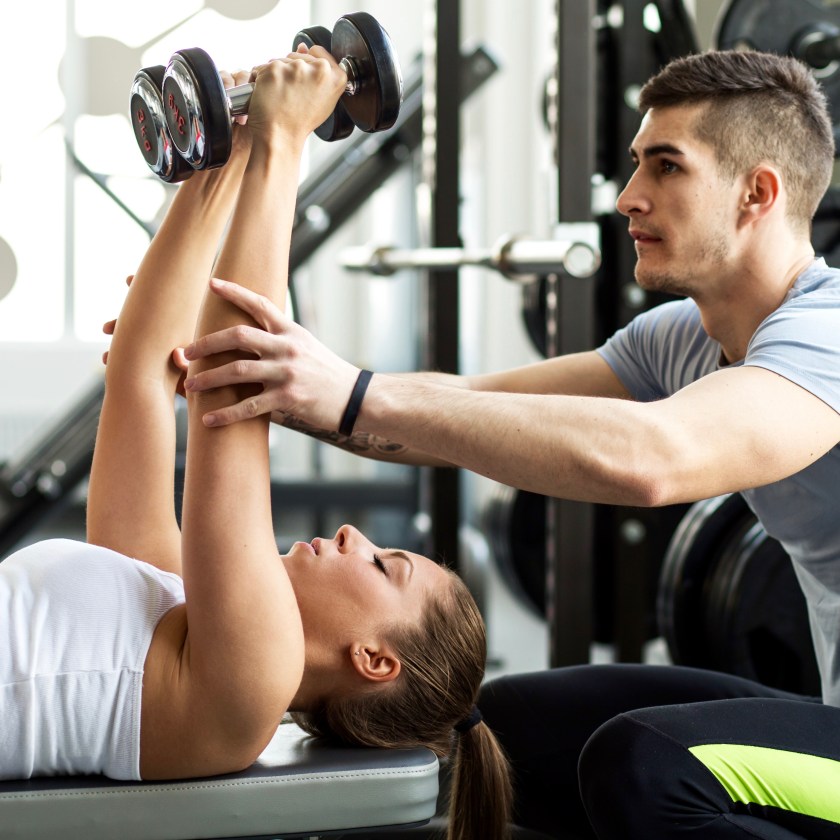
It is very important to have a recovery day between training sessions, to allow the muscles to recover and grow in preparation for the next training day. Getting enough sleep is important, as much of this rebuilding takes place during sleep. And a boost of protein in the evening before sleep can support muscle growth. In general, you will find you are hungrier, but make sure that hunger is satisfied with a good balance of lean proteins, complex carbs and raw or lightly cooked vegetables.
Principle 3
The third and final principle is to target all of the muscles that must work together to create the result, not just isolated “favourite” muscles. In this way we build different parts of the pecs (chest muscles) by using different angles of attack on machines or with the bench, we build the deltoids (shoulder muscles) in the round by exercising the central, front and back deltoids separately. There are often compound exercises that achieve great results.
If it sounds a bit complex, it isn’t really, but a bit of help from a Personal Trainer can clarify and get you set up to structure your own training in effective ways.
Give me a call or drop me a mail if you want a hand!
Training for every age and stage
As we go through life our bodies change and adapt to different life stages. This means our exercise needs change too and so should the approach we take to our exercise routine. While children and teens need to develop skills and good exercise habits, young adults need to support an active lifestyle and older adults should focus on maintaining muscle mass, flexibility and a healthy weight. Diet is an important part of any exercise programme.
Let’s look at the exercise needs of the different age groups, and there are some differences in need by gender.
Younger exercisers

Younger children are mainly learning the skills of co-ordination, balance and judgement as their bodies rapidly grow and develop, with lots of energy used in endless playing, running and trying out different activities. This means that the ideal exercise activities for children are active games and sports that develop their ball skills, balance and co-ordination.

Teenagers want to look good, but often experience low energy because of the hormone changes in their bodies, and their muscles are growing faster than their bones are lengthening. Exercise provides an excellent way of managing hormone balance, so lots of cardio-type activities, whether in a gym, through dance or in a sport like football, are really good. Gym work can build strength and shape the muscles, while building good exercise habits, but this must be done with care under the age of 16 when the bone length in limbs catches up with muscle development. A customised programme is a good idea.
In our late teens and twenties we feel indestructible and competitive, happy to try to excel at our chosen sport at the peak of health and fitness, but as we go deeper into our thirties, we don’t always feel quite as agile and able, especially if we have slipped into a more sedentary lifestyle, with little exercise or sport. From the age of 16-35 you can and should exercise at your peak, play lots of sport and remain active. A targeted exercise programme can help you reach your maximum potential in this period.
For women who go through a pregnancy in their twenties and thirties, there are impacts on the body that must be taken into account in exercise planning. Strengthening the pelvic floor, regaining good muscle tone in the core and being sensitive to changes in the joints are all aspects that should be considered, in addition to an overall fitness routine.
Older exercisers
As we reach our later thirties and our forties, we go through a slowing down process as the body reaches its peak and then plateaus. We may develop some stiffness in our joints and tendons and find that we put on weight more easily. Stretching is important. It is also useful to increase the amount of cardio work we do, as well as review the gym routine to ensure we are using the equipment that offers the most control for targeted training of specific muscle groups – a trainer can advise on these. One key is to set realistic targets and a graduated programme to meet these – a small increase in intensity each week quickly adds up to a strong performance, whether in strength, endurance or something specific like number of push-ups.
Diet is increasingly important at this stage – make sure the balance is there and that we are not overloading on carbs. And if you have become inactive over a number of years and are returning to exercise, then a carefully graduated programme is the answer, supported by a good trainer.
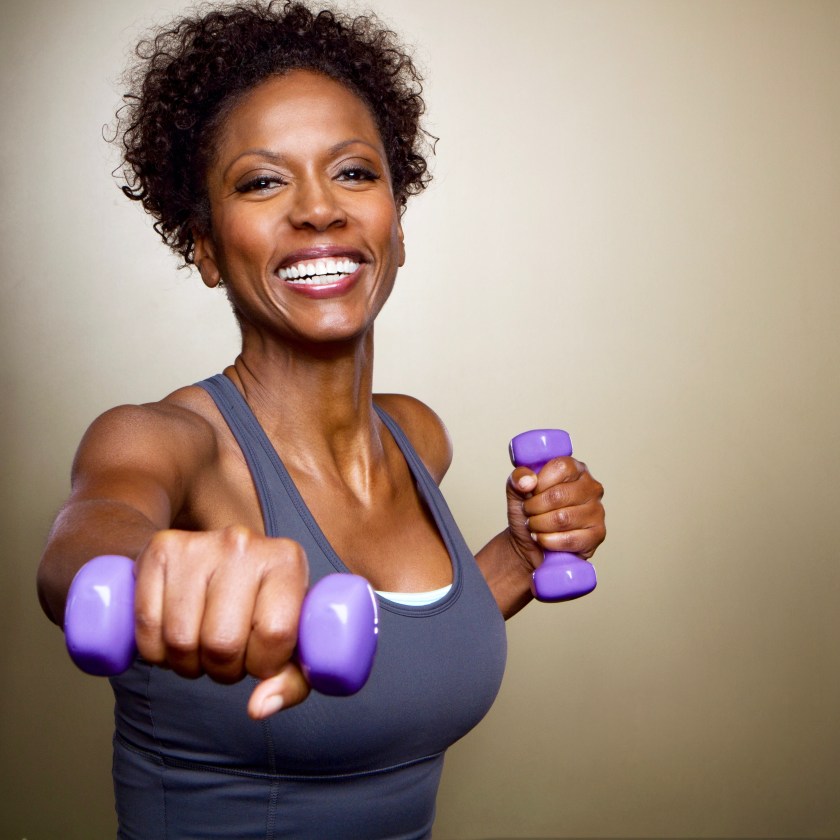
The slowing down process accelerates in our fifties and, from sixty and beyond, it becomes important to also maintain muscle strength, as well as balance and co-ordination. The good news is that the right exercise routine can keep you fit, active and healthy right through this process and delay the effects of aging considerably compared to a non-exerciser. Once again, adjusting the exercise programme to one that gives gentle cardio, maintains muscle strength, but also adds elements of balance and co-ordination, is important, supported by the right balance of diet for your changing needs.
So, whether you want to explore family fitness across children, teenagers and adults, or you want to adjust your training to your life stage, or you simply have a specific fitness or performance goal you want to reach, don’t hesitate to reach out to me for a free initial discussion. Once I understand your goals, lifestyle and current stage of fitness, I can help you to achieve the health and fitness you deserve.
Happy training!
Body sculpting: making the most of your shape
A lot of us look at our bodies and wish we could enhance our best features and reduce the ones we like less, but believe we just have to live with our body shape as it is. While there are of course limitations that depend on your genes, height and overall body type, there is actually quite a lot we can do to make the most of our bodies. I call this “body sculpting”.
Understanding body sculpting requires that you understand a bit about how the body conditions itself in response to different kinds and combinations of exercise.
We have three muscle types:

1. Slow-twitch muscles that are adapted for long periods of low-intensity work. These tend to be long and lean. If you look at the physique of a professional long-distance runner, you will see the typical physique created by lots of low-intensity or cardio exercise. These muscles tend to be fuelled by carbohydrates and fats, so a lot of cardio work tends to burn off body fat and use up excess calories.
2. Intermediate-twitch muscles have the ability to act like slow-twitch or fast-twitch muscles (see below) and tend to take on the characteristics of the one that suits your exercise type – longer and leaner muscles suited to long, slow cardio work, if that’s what you mostly do, or heavier, stronger muscles suited to more intense strength or explosive power work, if that is what you do more.
3. Fast twitch muscles are the ones that are stronger, bigger and used less, but when they are used they provide a lot of force to move weights, power a sprint or enable a jump. These muscles tend to be fuller, rounder and heavier if exercised with resistance like weights. These muscles tend to use carbohydrates and creatine for energy, and need protein to grow in response to exercise.
Body sculpting uses these muscle characteristics to influence your body profile, by providing a mix of exercises that lean and tone certain muscles, while growing and shaping others. This is done in combination with a well-balanced diet, in tune with the exercise load. This means that every body sculpting programme is unique to the individual, with good results in 6-12 weeks.
If you are overweight, then it is a good idea to go through a weight loss exercise programme first as Phase One, then follow up with Phase Two by doing more targeted body sculpting.
If you want a slim, toned stomach and trimmer waist, shapelier bottom and thighs, a deeper chest or trimmer arms, there are plenty of ways of achieving these goals in the fastest time and without wasted effort. Don’t rely on generic programmes – you need the exercise routine that is customised to your unique needs.
Give me a call or message me to discuss how I can work with you to design an individualised body sculpting programme to enhance your look. I won’t turn you into Superman or Superwoman, but I guarantee you will look your best and feel better for it.
Look good, feel good!
Losing weight and staying slim
Our modern lifestyles often don’t lend themselves to remaining slim, fit and healthy. If your job is typical, then the chances are you spend a lot of time each day sitting – in a car, behind a desk, in front of a computer. If your schedule is typical, you struggle to find the time to buy fresh ingredients, prepare wholesome meals from scratch and often opt for a supermarket ready-meal. And this is not to mention the comfort food that is so easily available at every turn. It is not a surprise that many of us are overweight and often unfit too. But there is a solution.
Losing weight and becoming fit are much more easily achieved than we think. Overcoming the inertia and starting a healthier lifestyle is often the biggest hurdle. And once you get fitter and start experiencing the pleasure of exercise and the satisfaction of meeting your weight goals, it takes relatively little effort to stay that way.
So, here’s how.
Start by assessing your starting point.
There are three key measures here if weight is your concern, with some secondary ones that might be useful for monitoring progress later. Getting a Personal Trainer to complete these measures for you can be useful or you can ask your GP for an assessment, but most of these are easy to do yourself.

The first measure is BMI, which considers your weight for your height – BMI = weight (kg)/ height2(m2). A BMI between 18.5 and 24.9 is considered healthy: below 18.5 is underweight and over 24.9 is overweight. This is a broad indicator only though, as e.g. muscled athletes often measure over 24.9, as muscle is heavier than fat.
For this reason, the second measure is important too – body fat composition. This can be done on a body composition machine in many gyms, in some pharmacies and medical practices, or you can purchase a device for use at home, though this can be pricey. These machines will pass a light current through your body to determine muscle mass, body fat percentage and a few other related measures. For women, a healthy body consists of at least 20% fat and this is the target, while for men, who are naturally leaner, 10% is the ideal.
The third measure is a more subjective one – how healthy and trim do you feel? Do you feel flabby or overweight? Do you puff when you’ve walked up stairs? Do you struggle to bend over to pick something off the floor? Or if strength is an issue, do you e.g. struggle lifting anything heavy?
All of these measures can give you a good idea of your starting point and a first view of what your goals should be. A good Personal Trainer will add some more measures that will help with monitoring progress over time. These may include body measurements of arms, waist, hips, thighs, etc., if you feel comfortable having these measured.
The PT will also want to understand what your diet looks like at the outset. Gathering this information can involve a simple interview/questionnaire approach or may require you to keep a food diary for a short time. The diary will tell you what proportions of protein, carbohydrate, fats/oils, fibres, vitamins and minerals you are getting, as well as where these are coming from, all of which can inform good dietary advice.
Set realistic goals.
There are two types of goal – input goals or those concerned with what you will do, and output goals or those concerned with the results you will achieve. You will want input goals for how much and what type of exercise you aim to do and for your diet. Your output goals will mostly focus on your changing body shape, composition and tone, and on its performance.

These need not be complicated. You might say that Input goal 1 is to exercise for a minimum of 20 minutes a day, with a target to increase this to 30 minutes after 3 weeks. Goal 2 might be to rebalance your main meals in terms of carbs, proteins, vegetables, etc. or to include unrefined carbohydrates instead of refined carbs. Goal 3 might be to exclude your afternoon biscuit break and have a piece of fruit instead.
Your Output Goals will relate to your weight loss targets, body fat composition, etc. and these should be realistic and timed. The WHO says that a sustainable weight loss is 500g per week, as higher targets tend to lead to unhealthy yo-yo dieting. I prefer to focus more on the input goals initially, because I know the results follow. Your Personal Trainer can advise on realistic output goals, but generally, keep them modest and allow enough time, as sustainable results don’t happen overnight. A 6-12 month plan is perfect for most people.
Eat a balanced diet of the right foods.
There are a lot of fad diets out on the internet, many of which offer miraculous weight-loss in short periods, but these are unsustainable, leading to yo-yo dieting, and can damage your health. A common trend today is to exclude carbohydrates and have a high protein diet. While your body can survive on this sort of diet, it places high stress on the body as it has to work much harder to get its energy from protein, rather than the carbs and fats for which it was designed. While these diets can be useful for diabetics and can result in dramatic, short-term weight-loss, I would always prefer a more balanced and gradual approach that uses the body’s natural needs to deliver healthy weight loss.

The general rule is to have 30% protein (from meat, fish, poultry, eggs, dairy and a variety of vegetables by turn), 30% unrefined carbohydrate (brown bread, unpolished rice, pasta), 30% vegetables and fruit (variety and colour are important, preferably raw or steamed), plus a certain amount of oils and fats (butter, olive oil, oily fish, etc.), a bit of salt (6g/day) and enough water and other liquids to stay well-hydrated. Vegetarians can easily get their proteins from a good mix of vegetable and grain sources. If you stick to these guidelines, trying to keep as much variety in your diet as possible, and avoid refined carbs (white bread, biscuits, cakes, sweets), ready meals and highly processed foods, especially those with high salts and lots of saturated fats, you can’t go wrong. Especially avoid products containing palm oil, for both health and weight-gain reasons and for environmental sustainability.
Do cardio exercise daily.
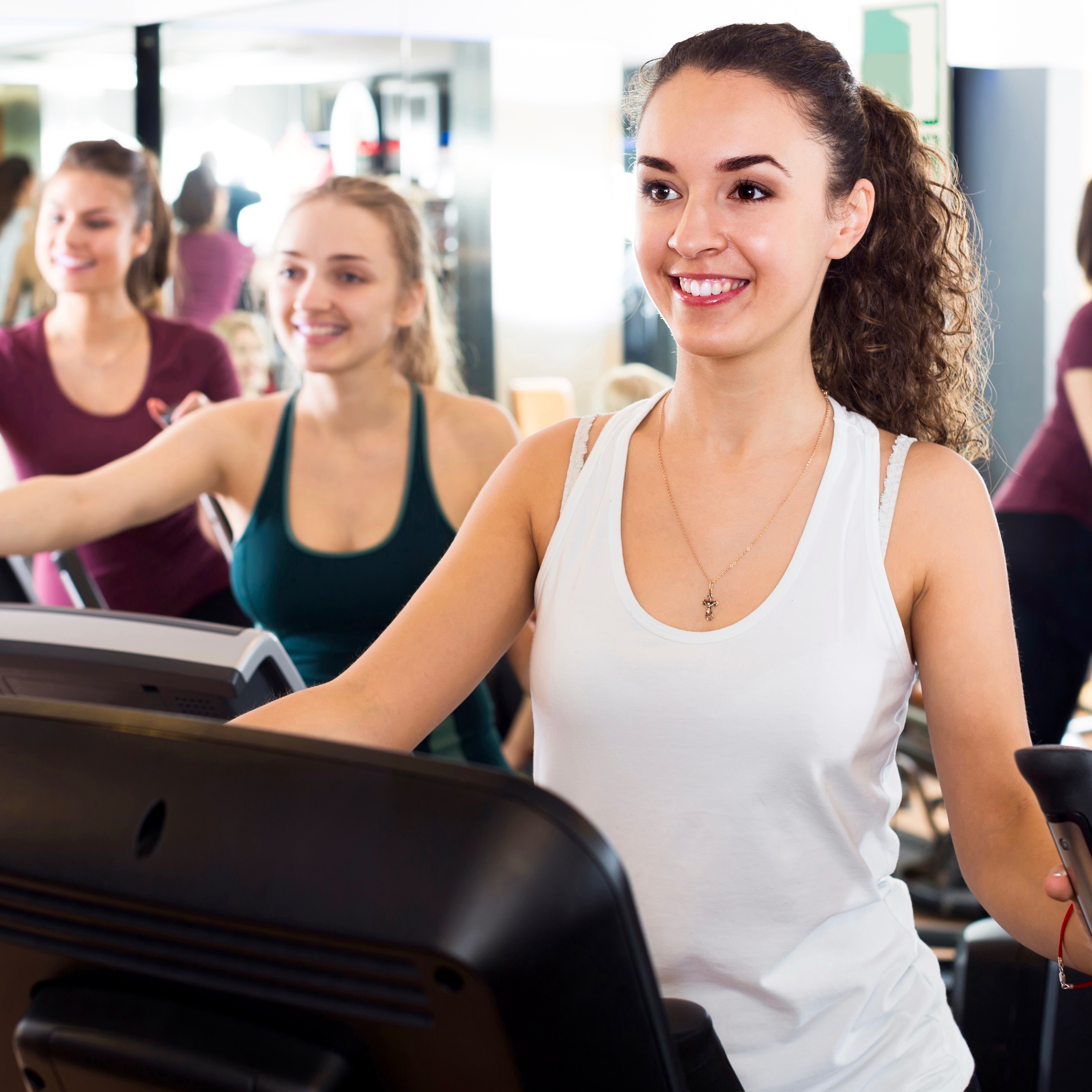
If you’ve got your diet right, you’re halfway there. The best exercise for burning off existing fat and using up any excess carbs, while toning the muscles, is cardio-vascular training – basically any longer, slower exercise that keeps you sweating at a steady pace. This might be a slow 5km run, a long, slow cycle or a long swim. It could be a workout on a rowing machine, cross-trainer or treadmill in the gym. The goal should be to do at least 20 minutes of more vigorous cardio a day or 30 minutes of gentler cardio. If you are not ready for this yet, take a long walk instead – 60 minutes of walking is great exercise until you build up the endurance to jog or work out more vigorously. Of course, if you are already fairly fit a good dance class, Zumba workout or some circuit training might be your preference. Start slow and build up to 20-30 minutes a day and keep some variety so you don’t get bored.
One you’ve got your weight down and your endurance up, you can turn to some of the other exercise types for building strength or sculpting the body more specifically.
Celebrate your milestones as you reach them.
If you’ve got your diet nicely balanced and you are doing some good cardio every day, I can guarantee that your weight will gradually become normal, your fitness will go up and your sense of well-being will improve. Visibly track your progress, with the help of your PT if needed, and celebrate your success at every stage.
Often the only thing that stands between you and a successful weight-loss and/or fitness programme is the feeling of being unsupported. That’s where the Personal Trainer comes in. A good PT is not just a source of knowledge and information on how to achieve your goals effectively, he or she is a supporter and encourager who is genuinely interested in helping you succeed, someone who will listen, encourage and motivate you.
If you want some help, whether remotely online or in person, don’t hesitate to reach out to me here:
Happy eating, happy exercise, happy life!
The role of the warm-up and cool-down
It is tempting to do a small warm-up and then dive into your main training session, focusing your time and effort on the exercises you like best, but doing thorough warm-ups and cool-downs is critical. They protect you from injury in the long term, improve your exercise technique and ensure a good range of movement during and after exercise.
So, why warm up?
The muscles, when cool, are dense and somewhat contracted, using energy efficiently for the small maintenance movements needed as you move about, sit or stand still doing your daily activities. The blood supply is limited to what is needed. By contrast, when you are exercising hard, the muscles are warm and filled with blood, so that they become more flexible, can stretch further and spring back against strain.
The transition from cool muscles at rest and warm muscles in exercise is quite big. This means that if you go straight from being still and cold to being highly active in demanding movement, there is a danger of stretching and injuring a muscle that is still too cool for the effort demanded. Or a muscle responds to the unexpected strain by going into spasm to protect itself – the classic cramp.
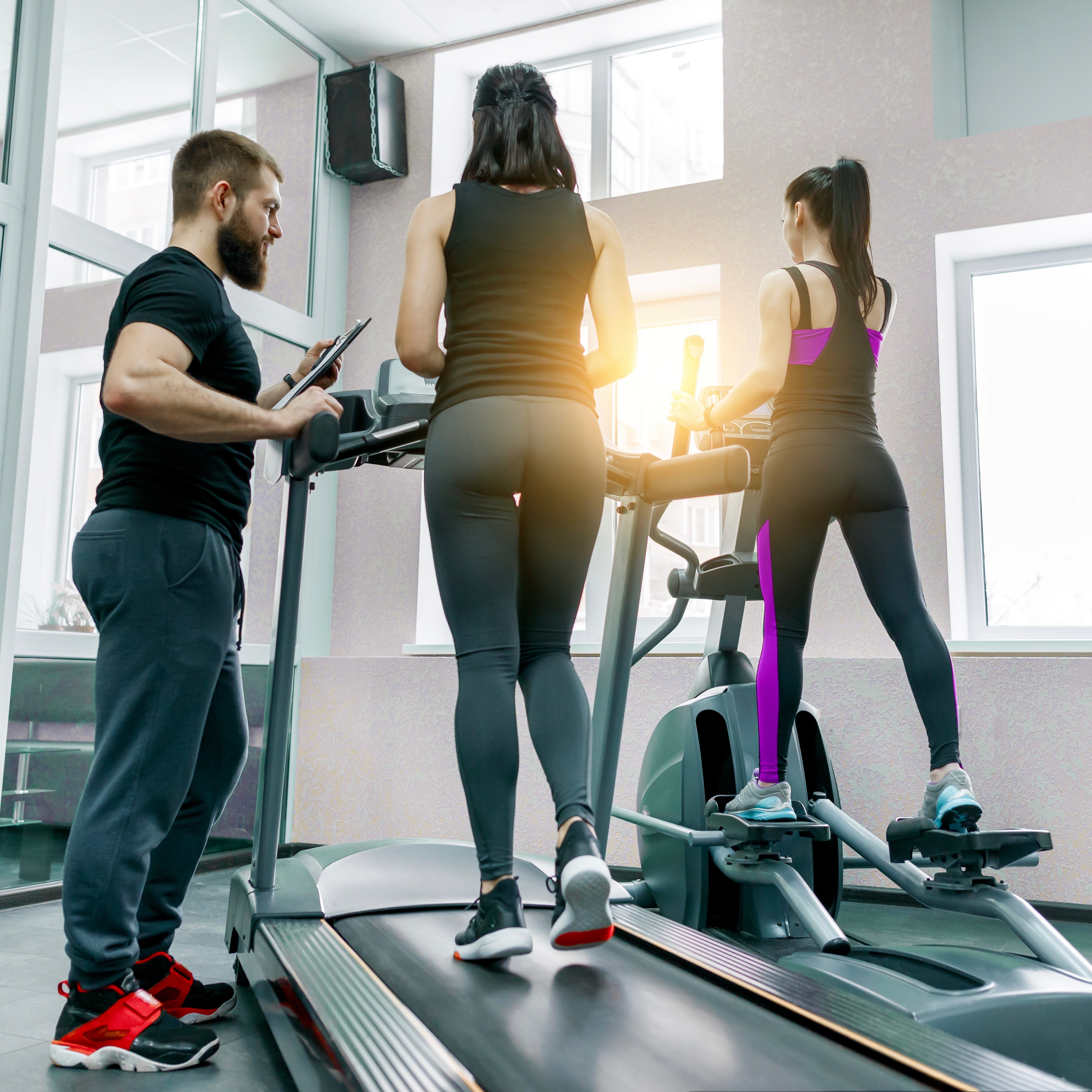
Do at least five minutes of gentle warm-up – running at slow pace or using a piece of equipment to gradually get all parts of the body working (rower, cross-trainer, treadmill). Keep going until you are warm and beginning to sweat. Add a few short stretches and then move to your main workout.
Cool-down is also important. If a very hot muscle that has just been working at maximum capacity just stops working, the flow of blood continues to that muscle, causing blood pooling, which can lead to dizziness and nausea until the body catches up and stops the supply of blood. But this can also result in an overcorrection, so that the muscles contracts fast and cramps.
At the end of your workout, use a cardio routine to gradually cool down – running gently until walk or on a piece of equipment in the gym (rower etc.). Now add some longer stretches for each muscle (see earlier blog post below), about 30 seconds per muscle or muscle group.
Warm up and cool down every time to avoid injury, maximise your exercise effectiveness and gain better flexibility – you won’t regret it.
Happy training!
The importance of stretching
We spend a lot of time planning our exercise routine to maximise weight control, muscle tone or strength, but surprisingly few people include a comprehensive stretching component in their routine. Yet the flexibility and range of movement that we gain from stretching is a critical part of healthy body function, not just in sports, but in everyday life. This becomes more important as we get older.
Effective stretching needs warm muscles, so start with a five-minute warm-up, whether a gentle run or session on the cross-trainer. Move on to the static stretches described below, but for no more than 6-10 seconds per stretch if you are about to do a full exercise workout. Longer stretches (30 seconds each) should be kept for your cool-down routine at the end of your exercise session. Short stretches after warm-up and longer stretches during cool-down is the rule, so that you avoid injury and gain maximum flexibility. Don’t ever bounce in stretch, but rather gradually stretch and then hold that position for the required duration.

If you are 16 or under, only ever do light stretches, as at this age your muscles’ growth has not yet caught up with bone growth, so more extreme stretches can actually cause injury.
A good stretching routine includes at least one stretch for each major muscle or muscle group. Here are 10 good stretches, starting at the foot and working up:
Feet: Standing, steady yourself with a hand, extend your leg in front of you, then point your toes (hold for the appropriate number of seconds) and then raise your toes high and hold. Repeat with the other foot.
Calves: Stand with the balls of your feet on the edge of a step or block, heels hanging over the edge. Steady yourself with a hand. Drop your heels until you feel the stretch in your calves. Hold for the required time.
Thighs: Standing upright on one leg, steady yourself with a hand and lift the other foot up to your bottom, holding it in place with your hand for the duration of the stretch. Now repeat with the other leg.
Hamstrings: Crouch with one leg and foot extended in front of you, toes and heel to the ground, the other leg bent at the knee. Place both hands on your bent knee and crouch downwards as you feel the stretch in the hamstring. Repeat with the other leg extended.
Bottom: The biggest muscle in the body, as well as several that affect tension in the lower back, are stretched in this exercise, one of my most important stretches. Go into a crouch position, then take your weight on one leg and lift the other so your ankle rests on the weight-bearing knee (as if you are about to sit cross-legged). Push the knee of your crossed leg downwards and lower your crouch position – you will feel the stretch through the bottom and into the lower back. Hold, then repeat with the other leg.
Core: Standing with feet apart and hands either raised or on your hips, stretch down to the side without bending forward. Hold and then repeat to the other side. Then arch the back – hold for the required time.
Back: Clasp your hands together and stretch your arms above your head. Hold and then release. Clasp your hands together and stretch your arms out directly in front of you at shoulder height. Hold and release.
Chest: Clasp your hands together behind your back and push out your chest. Hold and release.
Arms: Raise one arm directly up and then drop your forearm behind your head, stretching your triceps. Repeat with the other arm. Then straighten your arms at your sides and push backwards and down with the arms, stretching your biceps.
Neck: Gently push your ear towards your shoulder. Hold and release, then repeat to the other side.
Try out these static stretches before and after each exercise session for a few weeks and you will be surprised at how quickly your flexibility improves and the odd aches and pains disappear. I’ll add some images in due course to demonstrate further.
Happy stretching!
My philosophy of exercise in healthy living
When you talk about exercise, lots of people imagine breaking away from their regular daily activities to do something tough and sweaty. This doesn’t sound appealing and so they put off the exercise they need for another day. The reality however is that healthy living is about the way you live your day, not breaking away to do something different. So, what’s my philosophy of healthy living and how exercise fits into it?

First, healthy living is about balance. Do you have a good balance of mental, social and physical activity in your day? Do you have a good balance of nutrients in your diet? Are you getting enough good sleep to balance your active day? And so on. Chances are that if you have the balance, you’re more likely to be happy and healthy.
So, where does exercise fit into this balanced lifestyle?
To be healthy, you need a minimum of 30 minutes of moderately hard activity a day (that’s exercise that makes you sweat) or a good hour of brisk walking. If you’re cleaning the house, you’re doing a pretty good workout already, so that counts too. If you’re gardening, you’re doing exercise. Briskly walking to the station to catch the train counts too. Going out dancing offers a great cardio workout. Judge your level of activity and do some exercise to supplement it, so that on a restful day you might opt for an evening run or walk, while on an especially active day you won’t need an additional workout at all.
Additional things to watch out for are too many hours sitting in front of a computer or TV, gaining unwanted weight, stiffness and poor posture or finding it difficult climbing stairs. These are all signs you would benefit from a more structured exercise or daily routine and, in the case of weight gain, a look at your dietary habits in relation to your exercise.
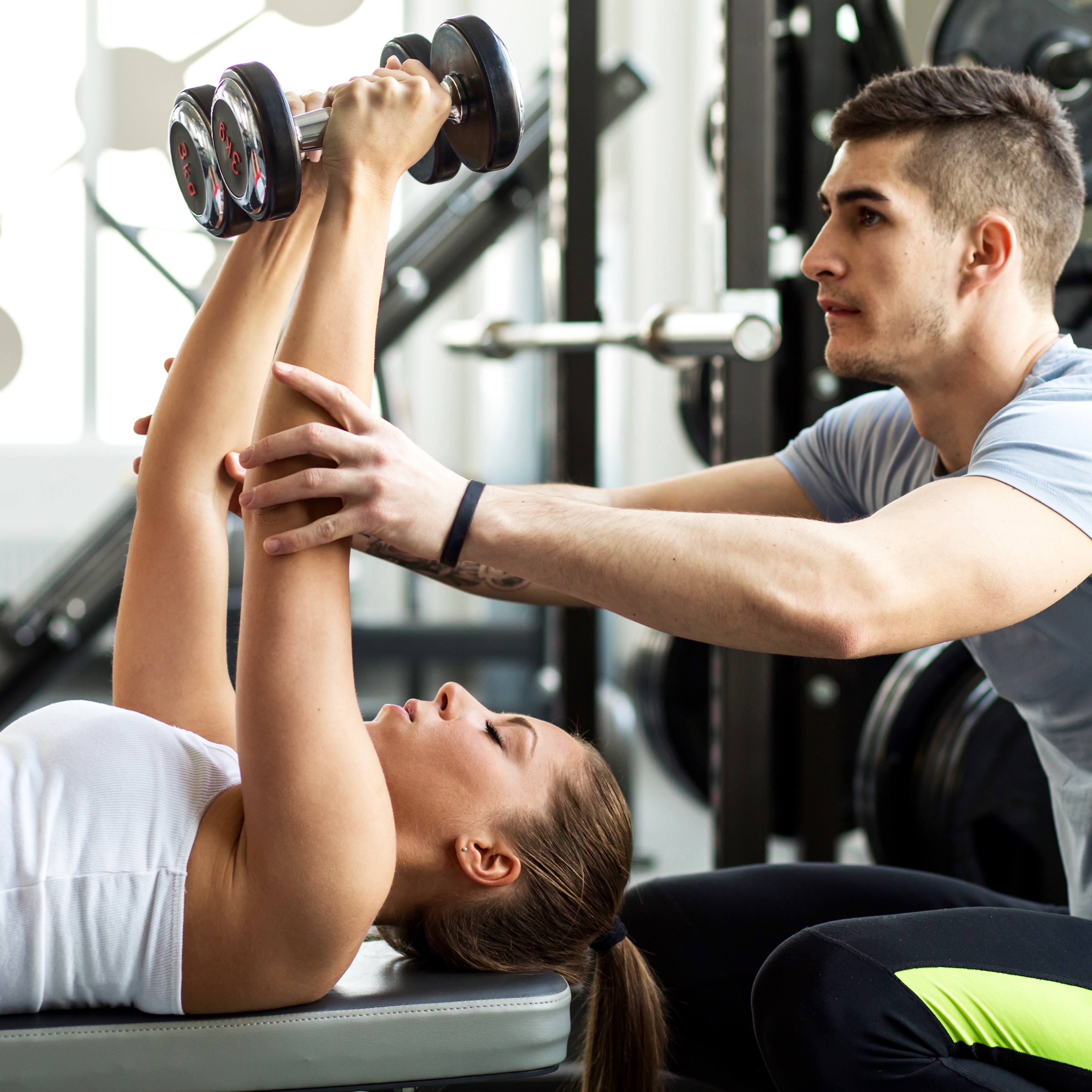
Of course, for many of us, exercise is a pleasurable part of the day, whether alone or as part of a sociable group. There is a great rush of feel-good endorphins when you do a good workout. There is a great sense of achievement when you see the results of targeted exercise. And there is a tremendous buzz of well-being after a good, post-workout massage.
In these cases, it is worth taking the time to build a 45-90 minute workout into your day every couple of days. A well-structured, personalised gym routine, whether with body weight exercises, resistance machines or weights, will quickly produce results (6 weeks is a good initial time to good results). The same goes for a high intensity circuit session outdoors or in the gym.

Balance your diet at the same time – 40% unrefined carbs, 40% variety of vegetables and fruit, 17% proteins (meat, fish, dairy and/or vegetarian) and 3% fats and oils, with lots of water – and you will feel energised and healthy.
In this blog I will focus week by week on different specific exercise and nutrition topics, so look out for new posts and do let me know if you want a specific topic covered.
Good eating! Good training!
 Realise your fitness dreams - personal training that delivers